|
The federal government allocates approximately $1.9 billion annually for maintenance projects related to buildings, roads on land owned by the federal government, parks and every other public asset. That may sound like a lot – until it is noted that a deferred maintenance study reported several years ago that $76 billion is needed immediately to adequately address the country’s federal deferred maintenance backlog.
Funding for deferred maintenance at the state and local levels of government is in high demand. The maintenance backlog is staggering, and the immediate maintenance needs represent hundreds of billions in spending.
City and county leaders are responsible for maintaining all local public assets, but their budgets are too thin to address most maintenance needs. The immediate needs of cities and counties are related to buildings, municipal parks, libraries, technology, sports fields, jails and law enforcement facilities, equipment, entertainment venues, convention centers, etc.
Companies interested in large government opportunities should look no further than the critical needs related to deferred maintenance. The most common projects tend to focus on maintenance and repair of elevators, ADA access upgrades, asbestos abatement, HVAC systems, roof repairs and upgrades to legacy technology systems. But there are much larger needs as well. City leaders in Houston will spend $54 million to renovate MacGregor Park. University executives at Eastern Michigan University have $42.5 to use for renovation of the campus’s Roosevelt Hall.
The Attica Central School District in New York will move forward with a Capital Improvement Project for repair and upgrades to three school facilities after residents approved funding for the $21 million effort. That project is in the design phase, and solicitation documents can be anticipated in late 2024. Construction would begin in the fall or early winter of 2025.
New York state law requires that school districts complete a building-conditions survey every five years. Most school districts have similar mandates. Attica completed its most recent survey in 2023, and recommendations focus on building maintenance, health and safety and education. Project components will include new fire alarms, classrooms and upgraded access that meets ADA compliance. Plans also include a parking lot redesign, new energy efficient windows, library and classroom realignments and technology upgrades. The project is now being designed, and the district will issue solicitation documents in late 2024 or early 2025. Construction is expected to begin in fall or winter 2025.
Municipal leaders in Amherst, Massachusetts, will oversee a $36 million library project that has some interesting issues. The city issued an earlier bidding document but then cancelled the solicitation after receiving proposals all with costs above what had been allocated for the project. The objective is to renovate and expand the Jones Library, which was originally built in 1927. The plan will include expanding the existing building into a 63,000-square-foot facility, replacing the roof and floor, abating asbestos and removing a natural gas boiler. The project will also include other utility and infrastructure modifications, landscaping, hardscaping, parking and pedestrian areas and other improvements.
Click here for more
|  | |
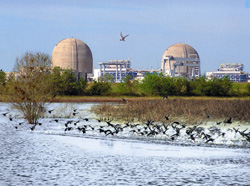
The Texas A&M University System will expand the state’s power-generation capacity by deploying a network of peaker power plants and investing in the next generation of nuclear power plants.
Peaker power plants – otherwise known as “peakers” - provide electricity to help supplement the Electric Reliability Council of Texas’ (ERCOT) power grid during peak demand. Peak demand periods typically occur during extreme heat and cold weather. Texas has already broken several peak demand records this year, and as the heat index intensifies the likelihood that the strain on the power grid will only increase in the future.
The Texas A&M System will collaborate with private developers to establish the peaker power plant network on land it already owns. The network will be funded through the $5 billion Texas Energy Fund, a proposition approved Nov. 7, 2023 to support the development, modernization and operation of electric generation facilities. The network will increase grid resiliency and help integrate intermittent renewable energy sources such as wind and solar.
The peaker network will provide an essential level of backup security to ensure ERCOT can deliver reliable power during these periods. These power plants are not to be run continuously. Instead they are intended to be activated quickly during extreme weather or events that require significant energy consumption. The rapid-response framework the network uses creates a level of redundancy to prevent blackouts that would otherwise leave Texas communities without power during dangerous conditions.
The System is also working to advance the next generation of nuclear reactors at its Texas A&M-RELLIS campus. Nuclear manufacturers were recently solicited for information to help kickstart the initiative. Through the nuclear initiative, the Texas A&M System will help increase power supply generation and capacity. In addition, the System will provide a platform for manufacturers to test cutting-edge reactors and technologies.
The System estimates the RELLIS campus could host multiple electrical power-generating facilities, including a first-of-its-kind reactor that would directly connect with and expand the state’s energy grid by up to 1 gigawatt (GW) of capacity. The reactors could be operational in five to seven years.
(Photo courtesy of the United States Nuclear Regulatory Commission.)
| |
The Texas Commission on Environmental Quality is making $92 million available to upgrade or replace heavy-duty diesel vehicles and non-road equipment. Applications are due July 29, 2024, on a first come, first served basis.
The grants come from the Rebate Grants Program, an initiative that promotes transitioning fossil fuel-based vehicles and equipment that use clean, alternative fuels. The program is a part of the TCEQ’s Texas Emissions Reduction Program (TERP), a program that improves the state’s air quality by replacing outdated machinery with clean technology upgrades. TERP has distributed over $1.4 billion in grants since 2001 to reduce Nitrogen Oxide emissions.
Eligible applicants include individuals, state and local governments, corporations or any other legal entity. The program covers three types of projects that can receive funding:
- The project may replace or repower on-road heavy-duty diesel vehicles and select non-road diesel equipment.
- The project may electrify the same types of vehicles and equipment.
- The recipient may buy or lease new, near-zero or zero-emission vehicles and equipment.
The replaced or upgraded heavy-duty vehicles and equipment may use alternative fuel types including electricity, hydrogen, compressed natural gas (CNG), liquified natural gas (LNG), propane or methanol. Applicants may also request additional funds to install onsite refueling infrastructure to complement vehicles and equipment powered by these alternative fuels.
The program will divide the funding between three categories:
- Small businesses will receive up to $30 million.
- New purchases will cover up to $20 million.
- The remaining $42 million will go to all other projects.
Recipients may receive grants that cover up to 80% of the costs associated with buying, leasing, replacing or repowering vehicles or equipment. Applicants can submit requests via mail, email or TCEQ’s third-party site.
(Photo courtesy of USDOT.)
|  | |
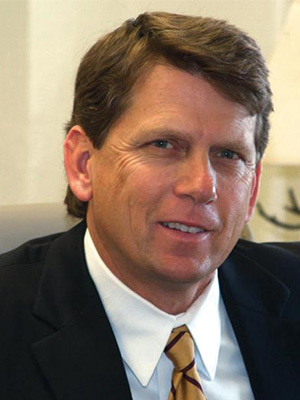
Gov. Greg Abbott has appointed Dan Hord and reappointed Steve Stodghill to the Public Safety Commission (PSC). Their terms will expire Jan. 1, 2030. PSC oversees the Texas Department of Public Safety (TxDPS), the agency responsible for enforcing laws, protecting the public and preventing and detecting criminal activity.
Hord is a founder and partner of an oil and gas company and a commercial property development and leasing firm. He is also the board chair of a private organization dedicated to improving the city of Midland by investing in local businesses and individuals.
In addition to his other leadership role, Hord is co-chair of the Executive Campaign Committee for the Young Life Camp LoneHollow Ranch and is a member of the Baylor College of Medicine Development Board. He graduated from Baylor in 1989 with a Bachelor of Business Administration and formerly served on the Baylor University Board of Regents.
| |
The governor reappointed Steve Stodghill to PSC. Stodghill has served as a commission member since 2019 and currently serves as a law firm partner. He is also a member of the State Bar of Texas, the Dallas Bar Association and is a research fellow for the Southwestern Legal Foundation.
Stodghill has served on several boards, councils and associations, including as a board member of the University of Texas Harry Ransom Center, UT College of Liberal Arts Advisory Board and the UT System Chancellor’s Council. He is also a former chairman of the American Film Institute National Council and former member of the American Bar Association and the Texas Bar Foundation.
| |
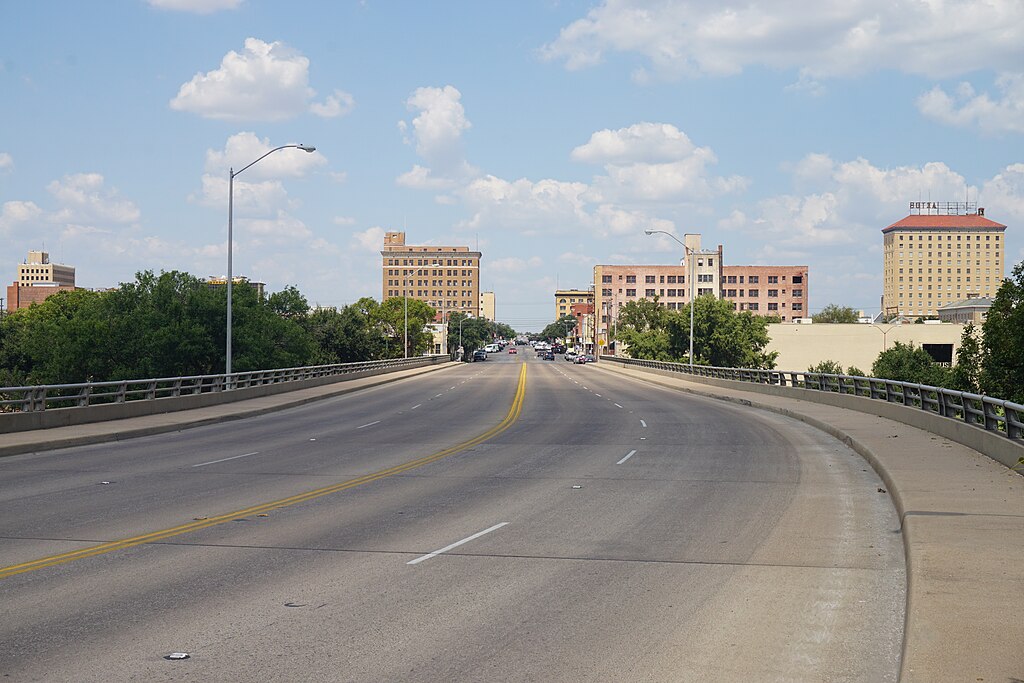
The city of San Angelo will use $28.4 million to expand and improve pedestrian and cyclist infrastructure across the city. The two-phase project is currently in the design phase, with construction anticipated to begin in summer 2026.
The Community Accessibility and Connectivity Loop project will extend sidewalks, improve ADA compliance and connect neighborhoods. Once completed, the loop will provide residents with safe and accessible links to downtown, medical facilities, schools, parks, higher education facilities and other essential amenities. In total, the project will build 13.7 miles of sidewalk, install five pedestrian signals and improve 17 traffic signals.
Phase 1 of the project will cost $5 million and include reconstructing and upgrading pedestrian elements such as sidewalks, bump-outs, crosswalks and signals. The improvements will enhance storefront-to-storefront accessibility and ensure the street is ADA compliant.
The city will use $23.4 million to build the project’s second phase. Plans include rehabilitating and reconstructing a pedestrian and bicycle loop that connects various San Angelo areas. The project will build sidewalks and bike paths and include pedestrian enhancements at signals and mid-block crossings. The city will ensure the project will be ADA compliant.
San Angelo received $18.9 million from the Texas Department of Transportation’s (TxDOT) 2023 Transportation Alternatives Set-Aside (TA) Program for the project. The city matched 20% of the grant for the remaining project budget.
(Photo courtesy of Michael Barera.)
| |
Mary York
Director of Workforce Development
Texas Workforce Commission
| |
Public career highlights and education: After earning a Bachelor of Science degree from Texas A&M University, I spent the first 13 years of my career working for the Texas Department of Agriculture. For nearly five years after that, I served as the deputy director within Governor Greg Abbott’s Economic Development and Tourism Office.
In September 2020, I joined Texas Workforce Commission (TWC) as director of the Employer Initiatives Division. I was then named director of TWC’s Outreach and Employer Initiatives Division. I had served in that role for almost three years when I was appointed to director of workforce development earlier this month.
What I like best about my public service: For nearly 180 years, the state of Texas has been associated with the promise of economic opportunity. I’d like to believe that, through public service, we help ensure the promise of opportunity for the next 180 years.
The best advice I ever received: Someone once told me: “Your mind is a suitcase. Pack it with as much stuff as possible because you never know where you’re going.” It has become a useful reminder that I always have more to learn.
People might be interested to know that: People expect me to be really extroverted because my career in state government has included several public-facing roles. I am actually just an introvert who can be more outgoing when the moment calls for it.
One thing I wish more people knew about the Texas Workforce Commission: Local engagement is a critical component of virtually all TWC services. With more than 170 local Workforce Solutions offices, the state’s workforce development services canvas all of Texas. We engage directly with local jobseekers, employers, nonprofits, colleges, school districts and others to foster impactful partnerships and provide resources to all segments of the Texas Workforce System.
| |
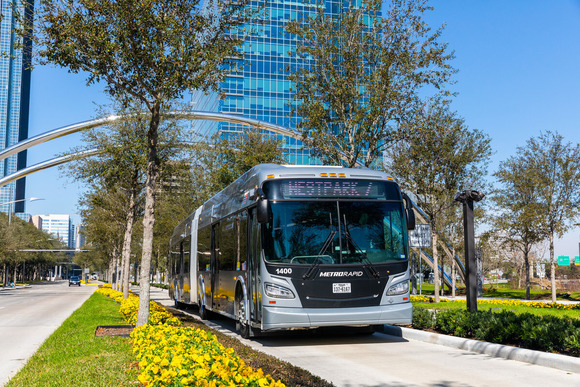
A project to add a 25-mile bus rapid transit line that would have provided service to four universities and various major employers located throughout the Houston area is no longer moving forward.
Financial concerns and a need to prioritize essential services contributed to the Metro Transit Authority of Harris County Board of Directors’ decision not to move forward with a grant application for the $1.5 billion University Corridor Project, the board decided Monday at its monthly strategic planning meeting.
Click here to read more about the halted project.
(Photo courtesy of METRO.)
|  | |
Houston has officially adopted the city’s $6.7 billion Fiscal Year 2025 budget, a 7% increase from last year. Mayor John Whitmire separated the budget’s priorities into four categories: public safety, government efficiency, quality of life and infrastructure. All categories saw an increase in funding from the previous year, except for quality of life, which decreased by 2.8%. The fiscal year begins July 1.
The $3.3 billion general fund, paid mostly by property and sales tax, accounts for half of the city’s total budget. The FY24 general fund is 2.1% higher than the previous year’s.
The city will distribute most of the general fund across six functional areas: public safety, development and maintenance services, human and cultural services, administrative services, elected officials and other.
The public safety departments - including the fire department, Houston Emergency Center, municipal courts and police department - will receive 56.7% of the general fund budget. The other categories will split the remaining 43.3%. All other categories receiving funds will also help support public safety activities.
- Debt service will use 17%.
- Other will receive 9.7%.
- Human and cultural services will receive 7%.
- Development and maintenance services will receive 5.7%.
- Administrative services will receive 2.8%.
- Elected officials will receive 1.1%.
Two major impacts on the budget for this year are a $1.5 billion firefighters’ settlement, which covers back pay and wage increases from 2017 through 2029, as well as a court ruling concerning Houston’s drainage system that costs around $100 million.
Aside from public safety, the budget emphasizes investments in drainage and infrastructure, including generators for multiservice centers to protect residents during extreme weather emergencies. Plans include repairing aging water mains, reducing traffic congestion, enhancing infrastructure resiliency and advancing climate adaptation and mitigation solutions.
(Photo by NORTHFOLK on Unsplash.)
| |
The U.S. Department of Energy has released a set of Supply Chain Cybersecurity Principles designed to secure the global energy supply chain against an array of cyber threats.
Developed in collaboration with U.S. allies abroad, the Idaho National Laboratory and private industry partners, the principles are an attempt to establish best practices for cybersecurity throughout the supply chain, providing a framework to strengthen technologies used to manage and operate electric grids, renewable energy, oil, and natural gas systems worldwide.
Click here to learn more about the DOE cybersecurity principles
(Photo by Nikola Johnny Mirkovic on Unsplash.)
| |  |
 | |
The city of Georgetown, in collaboration with the Texas Department of Transportation (TxDOT), will spend $52.4 million to improve major highways and enhance local roads. All projects are currently in the design phase, with construction expected to begin in 2025.
Georgetown will invest $39 million into a two-part project to improve State Highway 29. The current road conditions feature insufficient capacity for increased traffic volumes, incomplete or missing sidewalks and an open drainage system. Once completed, the project will adhere to current design and safety standards and accommodate current and future development.
The eastern section of the project will use $30 million to widen the roadway from two lanes to a four-lane divided highway. The city will build a raised median with dedicated left- and right-turn lanes. The project will also improve the highway’s drainage and build water quality facilities.
The western portion of the project will use $9 million to expand the four-lane roadway to a six-lane divided highway. SH 29 will also feature left- and right-turn lanes in addition to a storm sewer system and improved signal infrastructure. The city will build a shared-use path for pedestrians and bicycles on both sides of the roadway.
The city will use $13.4 million to enhance Williams Drive to improve safety, congestion, accessibility and preserve public investment in the transportation network.
Georgetown will replace the road’s center turn lane with a landscape median, median openings and left-turn lanes. Plans also include installing street lighting, improving intersections and traffic signals, reconfiguring driveways and improving bike and pedestrian facilities.
(Photo courtesy of the city of Georgetown.)
|  | |
Jonathan Joshua has been hired as the chief information security officer (CISO) for Gov. Greg Abbott's office. He previously served as deputy CISO with the Texas Attorney General's Office. He brings 26 years of information security experience to the role.
|  | |
The Texas Water Development Board (TWDB) invested $50.1 million in eight projects to improve water and wastewater systems, build wells, enhance storage tanks and rehabilitate infrastructure.
The city of Hitchcock will receive $27.3 million to rehabilitate and replace infrastructure, including sewer mains, service connections and manholes. The city will assess the system conditions and inspect and evaluate the gravity sewer mains.
De Kalb will use $7.2 million to replace 62,000 linear feet of water mains. In addition, the city will rehabilitate an elevated storage tank and add looping into the system. The current distribution system is primarily cast iron and asbestos pipes.
The city of New Summerfield will spend $3.9 million to build a 100,000-gallon elevated storage tank. Plans also include upgrading the existing water distribution system main and drilling a water well.
The Hardin Water Supply Corporation will use $3.4 million to build an elevated storage tank and production well. The project will also build a control building, generator, chlorination, fencing and yard piping.
The city of Donna will receive $3.3 million to plan and design a wastewater treatment plant expansion. The project will expand the facility’s capacity to 2.2 million gallons per day.
The Brazosport Water Supply Corporation will use $2.5 million to plan a reservoir expansion project. The Harris Expansion Project will build an off-channel reservoir and associated infrastructure to expand water storage capacity.
The city of Huntington will receive $2.1 million to build a water well site next to the existing well property. As part of the project, the city will install aerators inside the existing elevated storage tanks.
The Loma Alta Water Supply Corporation will spend $300,000 to build a treated water supply line to an adjacent water provider. The project will install service pumps, a ground storage tank and a chlorination system. Plans also include replacing a sand filtration device, rehabilitating a pump station and replacing 24 existing water meters.
(Photo by Evangelos Mpikakis on Unsplash.)
|  | |
Dallas Area Rapid Transit (DART) has appointed Jamie Adelman chief financial officer. Adelman joined in 2023 as vice president of finance. She brings nearly two decades of finance leadership experience to the role. She officially took over the position June 19.
| |
Texas Attorney General Ken Paxton’s office on Monday filed an appeal in Travis County to halt the trial to determine whether the proposed financing plan for Austin’s $7.1 billion light rail is allowed under state law.
The AG’s office filed the interlocutory appeal moments after Travis County Judge Eric Shepperd began the trial to hear arguments in the pending bond validation lawsuit filed by the City of Austin and the Austin Transit Partnership — a nonprofit created to guide the Project Connect Initiative.
Click here to learn more about Austin's light rail trial
(Photo courtesy of Project Connect.)
|  | |
Houston Airports recently entered a memorandum of understanding (MOU) with Wisk Aero to bring advanced air mobility (AAM) to the city. The agreement expands on a recent public-private partnership (P3) with Sugar Land to develop vertiport infrastructure in the greater Houston area.
Under the MOU, Wisk and Houston Airports will partner to evaluate the requirements to support vertiport operations at George Bush Intercontinental Airport (IAH), William P. Hobby Airport (HOU) and Ellington Airport (EFD). Over the next year, the partners expect to develop infrastructure and routes, seek community input and continue conversations with the Federal Aviation Administration (FAA).
Click here to learn more about the Houston Airports MOU
(Photo courtesy of Wisk Aero.)
|  | |
The city of Kilgore has officially hired Donald Dixon as director of special services. Dixon most recently served as assistant director of development services for Dallas. He will replace B.J. Owen. Dixon brings 32 years of local government development experience to the position.
| |
Effective June 17, Cynthia Rushing began her tenure as Texas City’s director of finance. Rushing most recently served as director of finance for Harris County. Before Harris County, she was chief financial officer for Houston. Rushing brings more than 27 years of finance experience to the role.
| |
Gov. Greg Abbott announced these appointments and reappointments from June 14 through June 20:
Eleventh Business Court Division in Houston
Sofia Adrogué - Houston
Grant Dorfman - Bellaire
Advisory Committee to the Texas Board of Criminal Justice on Offenders with Medical or Mental Impairments
Jennifer Gonzalez, Ph.D. - Dallas
| |
Texas Government Insider is a free weekly newsletter detailing important happenings throughout the state and summarizing current political issues relevant to individuals interested in government.
Publisher: Mary Scott Nabers
Editors:
Adam Rollins
Dave Doolittle
| |